
Lane Weaving in Florida: Why It Causes Crashes and Who Is at Fault
Short answer: Lane weaving means moving back and forth between lanes to get ahead of traffic. In Florida, it is not illegal to change lanes, but Florida Statutes § 316.089 requires drivers to stay within a single lane as nearly as practicable and not to leave it until they have made sure the move is safe. A driver who weaves into another car and causes a crash is usually the one at fault, although Florida’s comparative fault rule can reduce what you recover if you share some of the blame.
Key takeaways
- Unsafe lane changes violate Florida Statutes § 316.089 and can support a negligence claim.
- Weaving combined with speeding or tailgating can be charged as aggressive careless driving under § 316.1923.
- Dashcam video, witness statements and the crash report are the strongest evidence in a weaving case.
- Under § 768.81, if you are found more than 50% at fault you generally cannot recover damages from the other driver.
- Most Florida negligence claims must be filed within two years under § 95.11.
What counts as lane weaving?
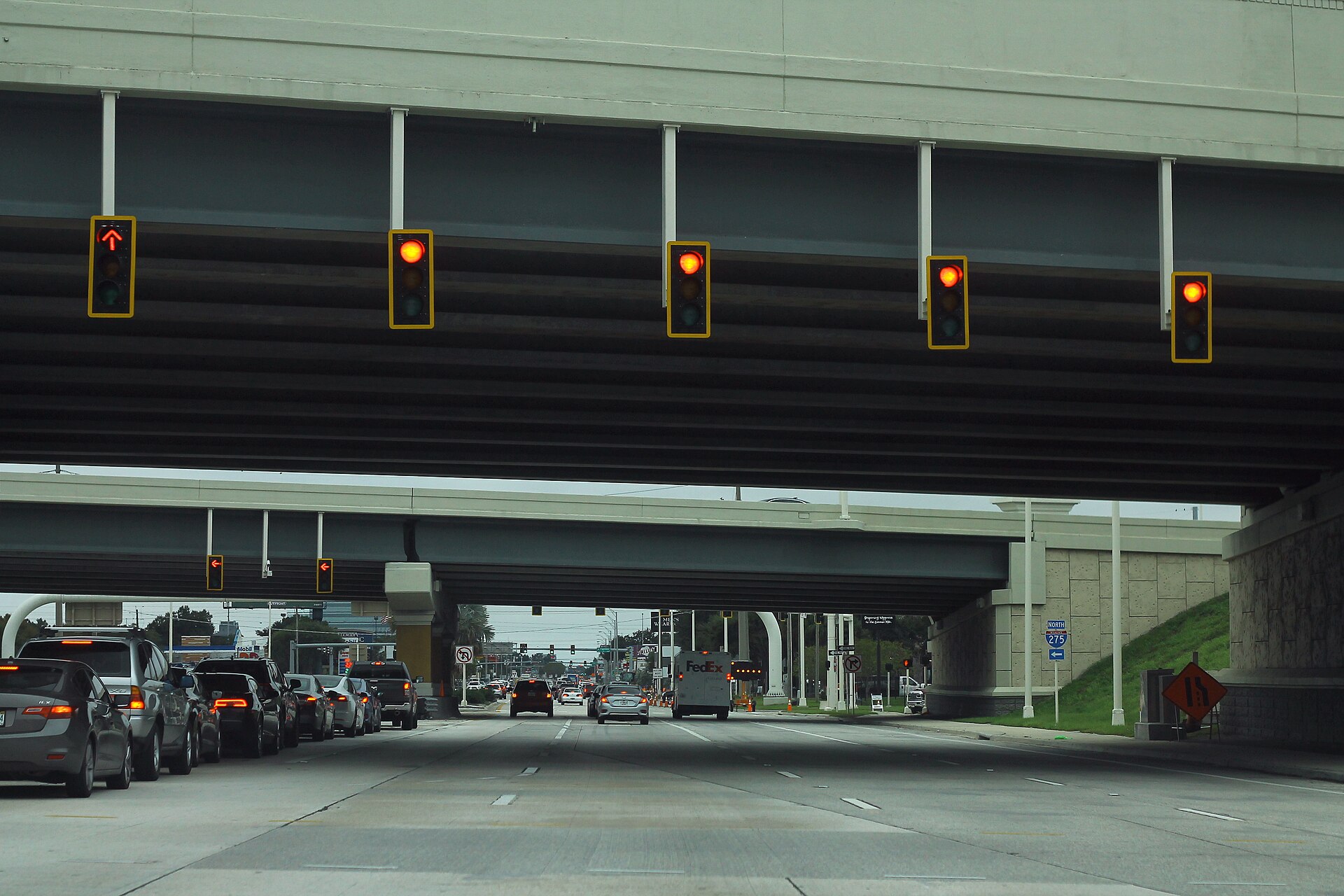
Weaving is a pattern, not a single lane change. It usually looks like a driver cutting between cars with little space, changing lanes repeatedly without signaling, using a gap that is too short for the speed, or moving across several lanes at once to reach an exit. On busy Tampa Bay roads such as I-275, I-4 and Dale Mabry Highway, where traffic speeds change quickly, those moves leave other drivers very little time to react.
What Florida law says
Section 316.089 sets the basic rule: on a road divided into lanes, a vehicle must be driven as nearly as practicable entirely within a single lane, and it must not be moved out of that lane until the driver has first ascertained that the movement can be made with safety. Separate rules require a turn signal before changing lanes, and § 316.0875 limits passing in no-passing zones.
When weaving is combined with other conduct, it can become a more serious offense. Under § 316.1923, a driver commits aggressive careless driving by committing two or more listed acts at the same time or in succession, such as speeding, unsafe lane changes, following too closely and failing to yield. A traffic citation is not required for a civil claim, but a citation or report narrative describing these acts is useful evidence.
Why weaving causes so many crashes
- Blind spots. A weaving driver often enters the space a second or two after another driver checks the mirror.
- Short gaps at high speed. At 65 mph a car travels roughly 95 feet per second, so a short gap disappears almost instantly.
- Chain reactions. One driver brakes hard to avoid the weaver, and the car behind rear-ends them. The weaver may never touch either vehicle.
- Sideswipes and spin-outs. Contact at an angle can push a car into another lane or off the road.
NHTSA groups weaving with speeding and tailgating as aggressive driving behaviors that increase crash risk.
Who is at fault in a weaving crash?
The driver who left their lane without making sure it was safe is usually responsible. Fault becomes harder to prove when the weaver did not make contact, when both drivers changed lanes at the same time, or when the other driver claims you were speeding. That is why the facts recorded in the first days after the crash matter so much.
Florida uses modified comparative negligence under § 768.81. Your damages are reduced by your percentage of fault, and if you are more than 50% at fault you generally cannot recover from the other driver. Insurers know this, and they often argue that the injured driver was going too fast or could have braked sooner.
What about a “phantom” weaving driver who drove away?
If a weaving driver forced you off the road and left, you may still have options. Uninsured motorist coverage on your own policy may apply to a hit-and-run or a no-contact crash, depending on the policy terms. Report the crash to police right away and write down anything you remember about the vehicle.
Evidence that helps prove weaving
- Dashcam footage from your car or nearby drivers.
- Traffic camera or business security video, which is often overwritten within days.
- Names and phone numbers of witnesses.
- The Florida crash report and any citation issued.
- Photos of vehicle damage, which show the angle of impact.
- Vehicle event data, in more serious crashes.
Injuries and what you can recover
Sideswipes and chain-reaction crashes often cause neck and back injuries, shoulder injuries and concussions. In Florida, your own PIP coverage pays first for medical bills and part of lost income, regardless of fault. To claim pain and suffering against the weaving driver, your injury generally must meet the threshold in § 627.737(2), such as a permanent injury. For merges specifically, see who is at fault in a merging-lanes accident. Our guides on PIP vs health insurance in Florida and how much a personal injury case is worth explain these steps.
Frequently asked questions
Is lane weaving illegal in Florida?
Changing lanes is legal, but Florida Statutes § 316.089 requires drivers to stay within one lane as nearly as practicable and not leave it until the move can be made safely. Unsafe weaving can lead to a citation and, combined with other acts, to an aggressive careless driving charge under § 316.1923.
Who is at fault when a car weaves into my lane?
Usually the driver who changed lanes without making sure it was safe. Florida’s comparative fault rule can reduce your recovery if you were also partly at fault, and bar it if you were more than 50% at fault.
What if the weaving driver never hit my car?
You may still have a claim if the weaving driver caused the crash. Witnesses, video and your own uninsured motorist coverage can matter in no-contact crashes.
How long do I have to file a claim after a Florida car accident?
For most negligence claims arising after March 24, 2023, Florida Statutes § 95.11 sets a two-year deadline. Some claims have different deadlines, so check early.
Talk with Fiol & Morros
If a weaving driver caused your crash in Tampa or elsewhere in Florida, we can help preserve video and witness evidence before it disappears. Call Fiol & Morros Law Group at (813) 223-6773 or use the contact page for a free consultation. The office is at 1515 N Marion St, Tampa, FL 33602.
Sources
- Florida Statutes § 316.089 (driving on roadways laned for traffic)
- Florida Statutes § 316.1923 (aggressive careless driving)
- Florida Statutes § 768.81 (comparative fault)
- Florida Statutes § 627.737 (tort exemption and injury threshold)
- Florida Statutes § 95.11 (limitations periods)
- NHTSA: Aggressive driving
This article is general educational information, not legal advice. Insurance policies and case facts differ, and no outcome is guaranteed. Reading it does not create an attorney-client relationship.






 English
 Español
