
Florida Move Over Law: What Drivers Must Do and Injury Claims
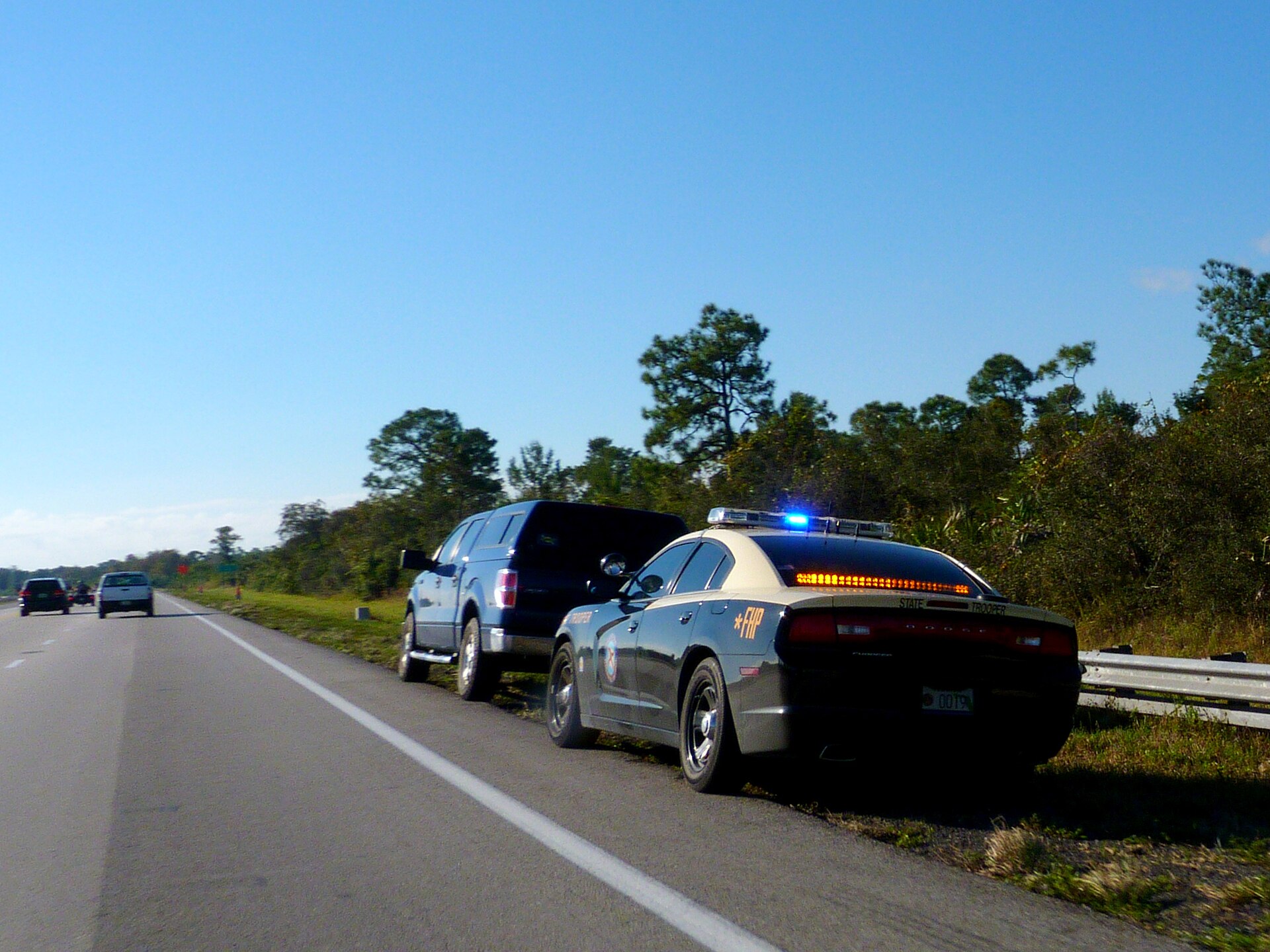
Short answer: Florida’s Move Over law, section 316.126 of the Florida Statutes, requires drivers approaching a stopped emergency, service, utility, sanitation, road maintenance, tow, or disabled vehicle to move out of the lane next to it when it is safe to do so. If you cannot move over, you must slow to 20 mph below the posted speed limit, or to 5 mph when the limit is 20 mph or less. Florida expanded the law in 2024 to protect any disabled vehicle stopped on the roadside with hazard lights, flares, or emergency signs. A violation brings a fine and points, and it can also be evidence in an injury claim.
Every year, people are hurt on the shoulders of I-275, I-4, and the Veterans Expressway while waiting for a tow truck, changing a tire, or helping after a crash. Troopers, paramedics, and road crews face the same danger. The Move Over law exists to give them space. This guide explains what the law requires and what injured people should know if a driver ignored it.
Key takeaways
- Move over a lane for stopped emergency, service, and disabled vehicles when it is safe.
- If you cannot move over, slow to 20 mph below the posted limit, or 5 mph on roads posted at 20 mph or less.
- Since 2024, the law protects ordinary drivers stopped with hazards, flares, or emergency signage.
- Violations bring a fine, fees, and points, according to FLHSMV.
- If you were hit on the roadside, the other driver’s violation may support your injury claim.
What section 316.126 requires
El Florida Department of Highway Safety and Motor Vehicles (FLHSMV) summarizes the rule simply: move over a lane for emergency, service, utility, and disabled vehicles stopped on the side of the road, or slow down to 20 mph below the posted speed limit if it is not safe to move over. On a road posted at 20 mph or less, slow to 5 mph.
The duty applies on multi-lane highways and two-lane roads alike. On a two-lane road where you cannot change lanes, slowing down is the required step. Moving over never permits an unsafe lane change; drivers must still check mirrors and blind spots before moving.
Which vehicles are covered?
Florida has broadened the law several times since it was introduced. According to FLHSMV, sanitation and utility vehicles were added in 2014, and road and bridge maintenance or construction vehicles displaying warning lights were added in 2021. The law covers:
- Law enforcement and emergency vehicles, such as patrol cars, fire trucks, and ambulances, using visual signals.
- Wreckers and tow trucks displaying amber lights.
- Sanitation and utility service vehicles.
- Road and bridge maintenance or construction vehicles displaying warning lights.
- Since the 2024 expansion, any disabled vehicle stopped on the side of the road displaying hazard lights, emergency flares, or visible emergency signage. FLHSMV notes that even a car with a flat tire is protected.
Penalties for violating the Move Over law
FLHSMV states that violating the Move Over law results in a fine, fees, and points on your driving record. The agency reports that in 2024 there were 205 crashes and more than 17,500 citations issued for drivers failing to move over in Florida. It also notes that drivers aged 20 to 29 are statistically the most likely to violate the law.
Why Move Over crashes cause serious injuries
A person standing beside a stopped vehicle has no protection. Even at moderate highway speeds, a passing car that drifts toward the shoulder can cause catastrophic injuries: broken bones, spinal cord damage, traumatic brain injury, or death. Occupants of a stopped car can also be hurt when a passing vehicle sideswipes or rear-ends it. Our pages on brain injury claims y reclamaciones por lesiones de la médula espinal explain how these serious injuries are handled.
Who may be responsible after a roadside crash?
The driver who failed to move over or slow down is the most obvious responsible party. Depending on the facts, others may share responsibility:
- An employer, if the driver was working at the time.
- A trucking company, if a commercial truck struck the stopped vehicle. See our guide on who can be held liable in a Florida truck accident.
- A rideshare company’s insurer, if an Uber or Lyft driver was involved.
In Florida, violating a traffic statute can be used as evidence of negligence. Our article on negligence per se in Florida injury cases explains how safety laws are used in civil claims.
How fault and comparative negligence apply
Insurers sometimes argue that the person on the shoulder shared the blame, for example by stopping in an unsafe place or not turning on hazard lights. Under Florida’s modified comparative negligence rule in section 768.81, an injured person’s damages are reduced by their percentage of fault, and a person found more than 50% at fault generally cannot recover in most negligence cases. Our guide to comparative negligence in Florida explains how this works.
Insurance after a Move Over crash
Florida is a no-fault state, so your own Personal Injury Protection (PIP) coverage usually pays first, up to $10,000 for qualifying medical bills and lost income. Seek medical care quickly, because Florida’s 14-day rule can limit PIP benefits if treatment is delayed. When injuries are serious or permanent, you may be able to bring a claim against the at-fault driver beyond PIP. Learn more in our guide to Florida car insurance requirements.
What to do if you were hit while stopped on the roadside
- Get to safety and call 911. Ask for police and medical help.
- Get medical care within 14 days, ideally the same day.
- Photograph your hazards, flares, or signs and the position of your vehicle.
- Collect witness and tow operator information. Tow drivers and responders often see the passing vehicle.
- Request the crash report. Our guide explains how to get a Florida crash report.
- Talk to a lawyer before giving recorded statements to the other driver’s insurer.
How long do you have to file a claim?
For most negligence claims arising after March 24, 2023, Florida’s limitations period is two years under section 95.11. Wrongful death claims and claims against government entities have their own rules. See our Florida car accident statute of limitations guide.
Frequently asked questions
What is the Move Over law in Florida?
Section 316.126 requires drivers to move out of the lane next to a stopped emergency, service, or disabled vehicle when safe, or slow to 20 mph below the posted speed limit if they cannot move over.
Does Florida’s Move Over law apply to regular disabled cars?
Yes. Since the 2024 expansion, it covers disabled vehicles stopped on the roadside displaying hazard lights, emergency flares, or visible emergency signage.
What is the penalty for not moving over in Florida?
FLHSMV states that a violation results in a fine, fees, and points on your driving record.
What if I cannot safely change lanes?
Slow to 20 mph below the posted speed limit, or to 5 mph when the posted limit is 20 mph or less.
Can I sue a driver who hit me on the shoulder?
Possibly. If your injuries meet Florida’s threshold or exceed PIP benefits, you may have a claim against the at-fault driver. The driver’s Move Over violation may be important evidence.
Talk with Fiol & Morros Law Group
If you or a family member was hurt on the side of a Florida road, contact Fiol & Morros Law Group o llame (813) 223-6773. Learn more about our abogados de accidentes automovilísticos en Tampa.
Sources
- FLHSMV: Move Over, Florida!
- Florida Statutes § 316.126
- Estatutos de Florida § 768.81
- Estatutos de Floridad § 95.11
This article is general educational information, not legal advice. Laws change and case facts differ, and no outcome is guaranteed. Reading it does not create an attorney-client relationship.







 Español
 English
