
Florida Seat Belt Law: Who Must Buckle Up and Injury Claims
Short answer: Florida’s seat belt law requires drivers, front-seat passengers, and passengers younger than 18 to buckle up in covered vehicles. Children who need a child restraint must use the appropriate restraint instead. Adults in the rear seat are not generally covered by the same statewide passenger requirement, but wearing a belt remains the safer choice. After a crash, not wearing a seat belt does not automatically eliminate an injury claim. Florida Statutes section 316.614 allows evidence of comparative negligence, making the relationship between belt use and the actual injuries important.
A crash on I-275 or a short trip through a Tampa neighborhood can leave an injured person with two different questions: was everyone required to wear a belt, and can the insurer reduce compensation because someone did not? The answers are related, but they are not identical. This guide separates traffic requirements from the evidence needed in a civil injury case.
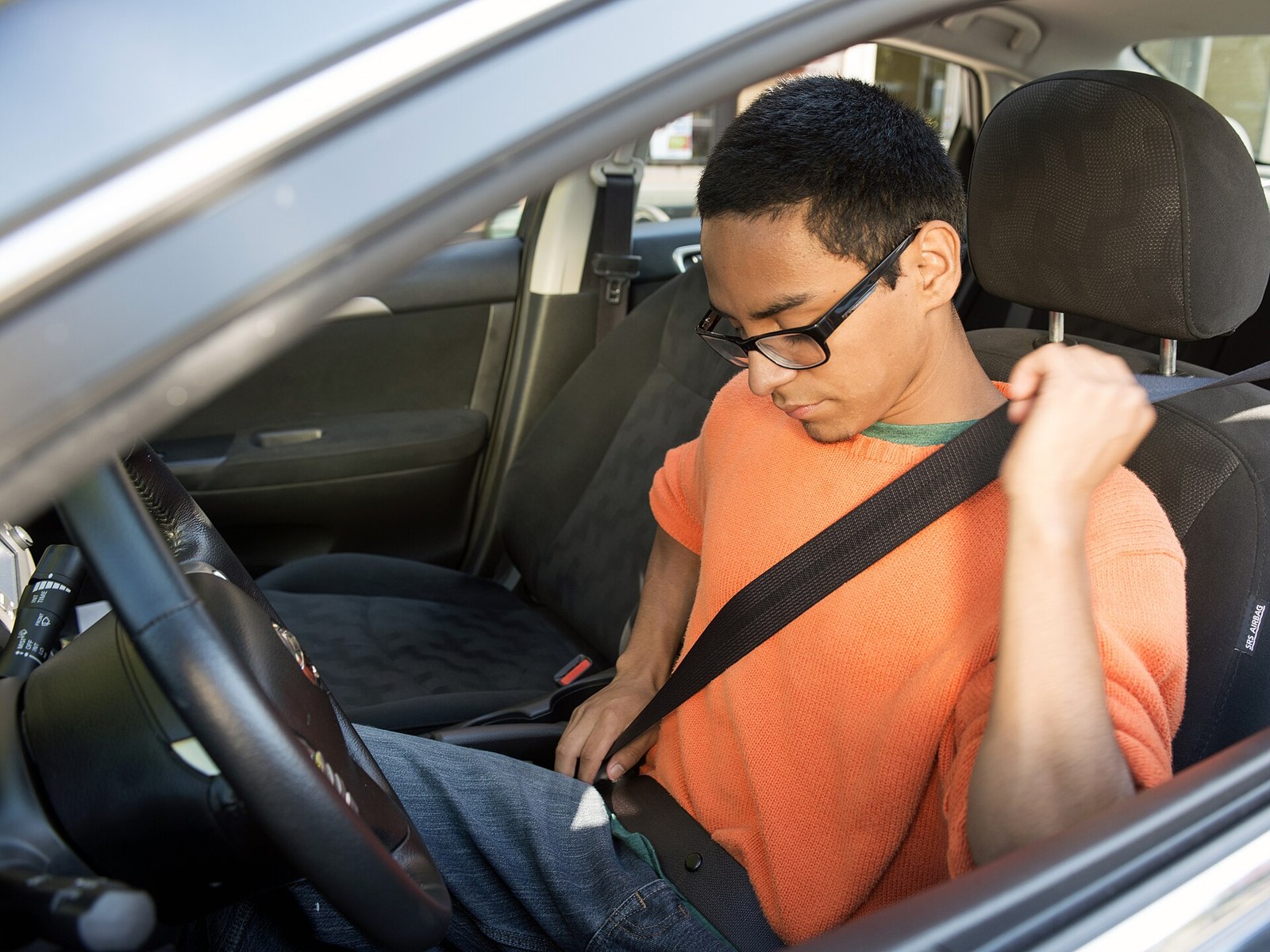
Who must wear a seat belt in Florida?
Bajo los section 316.614 of the Florida Statutes, the driver must be restrained, and the driver cannot lawfully operate a covered vehicle unless passengers under 18 are restrained by a belt or an applicable child restraint. An adult riding in the front seat must also wear a belt while the vehicle is moving. The law includes autocycles in its operative requirements.
For a typical family car, the practical rule is straightforward: the driver and front-seat adult passenger buckle up, and everyone under 18 is restrained regardless of seat location. Children may need more than the adult belt. Our separate Florida car seat and booster law guide explains those age-specific requirements. This article addresses adult belt use and injury claims, rather than replacing that child-restraint guide.
Do adults have to buckle up in the back seat?
Florida’s statewide adult-passenger requirement in this section addresses the front seat. It does not generally require a passenger age 18 or older in the rear seat of an ordinary car to use a belt. That distinction is not a recommendation to ride unrestrained. Rear-seat passengers can be seriously injured in a collision and can strike other occupants.
There is also a difference between a traffic-law requirement and a civil claim. An insurer may raise arguments about how the absence of a restraint affected injuries even where the adult passenger was not subject to the front-seat requirement. Whether that argument succeeds depends on the facts and applicable law, not simply the location of the passenger’s seat.
Exceptions are specific, not a general permission to skip a belt
The statute excludes certain vehicles from its definition, including school buses, buses transporting people for compensation, farm tractors, motorcycles, and trucks with a gross vehicle weight rating above 26,000 pounds. Other laws, federal requirements, or employer rules may still apply. Do not assume that one exception in this section answers every restraint question for a commercial vehicle.
There are also narrow exceptions for a physician-certified medical condition and certain workers performing specified delivery or collection duties. A person who finds a belt uncomfortable does not automatically qualify for a medical exception. If a health condition makes ordinary belt use unsafe, obtain medical advice and review the actual statutory conditions before relying on an exemption.
Can police stop a vehicle for a seat belt violation?
Florida permits enforcement of its seat belt requirements. A violation under section 316.614 is a nonmoving traffic violation punishable under chapter 318. The amount ultimately due can include local costs and assessments, so a headline fine should not be mistaken for the total payment on every citation.
A citation and an injury claim serve different purposes. The citation concerns compliance with traffic law; a civil claim concerns responsibility for injury and resulting losses. An injured person does not necessarily lose the civil case because a ticket was issued, and the absence of a ticket does not resolve every question about belt use.
What the seat belt defense actually asks
Section 316.614(10) says a violation is not negligence per se and is not prima facie evidence of negligence, but it may be considered as evidence of comparative negligence in a civil action. That wording matters. An insurer cannot fairly treat the statement “you were not buckled” as a complete explanation of how the crash happened or how every injury occurred.
The defense may require investigating whether a belt was available and functioning, whether it was used, and whether using it would have prevented or reduced particular injuries. Medical evidence and accident reconstruction can become important. A broken buckle, an improperly routed belt, or an injury that a belt would not have prevented may change the analysis. Read our Florida comparative negligence guide for the broader framework.
Does not wearing a belt automatically bar compensation?
No. In negligence actions governed by Florida’s current modified comparative fault rule, compensation is reduced according to the claimant’s share of fault, and a claimant found greater than 50 percent responsible for their own harm may not recover. Application depends on the claim and the governing law. There is no automatic percentage assigned to every unbelted occupant.
For example, suppose an insurer argues that an unrestrained passenger’s head injury would have been less serious with a belt. That is an evidence question, not proof that the passenger caused the driver to run a red light. The investigation should separate responsibility for the collision from any contribution to enhanced injuries. A lawyer can challenge unsupported attempts to combine the two.
Preserve the belt and the vehicle after a serious crash
If restraint use is disputed, photographs of the interior can matter as much as photographs of exterior damage. Record the seating positions, deployed airbags, buckle locations, and any visible belt damage. Keep emergency medical records and the names of people who helped occupants out of the vehicle. Do not speculate about details you cannot remember.
Ask about preserving the vehicle before it is repaired, salvaged, or destroyed. Inspection may reveal belt loading, damage, or other evidence. Do not cut, discard, or modify a restraint for an investigation unless an emergency requires it. If a seat belt appears to have malfunctioned, preserve the parts and obtain advice about whether a separate product claim needs investigation.
Insurance and deadlines remain separate questions
Seat belt disputes do not replace the ordinary insurance analysis. Florida PIP benefits, liability insurance, health insurance, and uninsured motorist coverage serve different functions. Coverage depends on the person, the policy, and the accident. Our Florida insurance requirements article explains why minimum required coverage may be insufficient after a serious collision.
Most recent Florida negligence claims have a two-year filing period under section 95.11, but exceptions and different claim types can affect the deadline. Get advice early rather than waiting for an insurer to finish debating the belt issue. Reporting a claim to an insurer does not necessarily satisfy a lawsuit deadline.
Frequently asked questions
Does a rear-seat passenger under 18 need a belt?
Yes. In a covered vehicle, passengers under 18 must be restrained regardless of seat location, using an applicable child restraint where required.
Is an adult rear-seat passenger covered by the same rule?
The statewide adult-passenger requirement in section 316.614 generally applies to the front seat. Rear-seat adults should still buckle up for safety, and injury-related arguments may need separate review.
Can I claim compensation if I was not buckled up?
Potentially. Not wearing a belt is not an automatic bar. Comparative negligence and the relationship between restraint use and your injuries may affect recovery.
Is there an automatic reduction for not wearing a belt?
No fixed reduction applies to every case. The relevant evidence and the applicable fault rules must be evaluated.
What if the seat belt broke or would not latch?
Preserve the vehicle and restraint if possible. A malfunction can affect the fault analysis and may require investigation of a product defect.
Discuss your Tampa accident with Fiol & Morros
If an insurer is blaming your injuries on belt use, a abogado de accidentes automovilísticos de Tampa can examine the evidence instead of accepting a blanket reduction. Contact Fiol & Morros to discuss your circumstances. This guide is general information, not a prediction of your case outcome or a substitute for individual legal advice.
Sources







 Español
 English
