




1515 N Marion St
Tampa, Fl 33602

Sufrir un accidente de bicicleta puede cambiar tu vida en cuestión de segundos. Un choque puede causar lesiones graves, estrés y costos inesperados como facturas médicas y pérdida de ingresos. Para muchas personas en Bahía de Tampa, Andar en bicicleta es una forma común de desplazarse, ya sea por diversión, ejercicio o trabajo. Pero cuando un conductor negligente o las malas condiciones de la carretera provocan un accidente de bicicleta, las consecuencias pueden ser dolorosas y costosas.
Fiol and Morros Law Group helps you take the right steps after a bicycle accident. We work hard to hold the right parties accountable and help you recover compensation for medical expenses, pain and suffering, and more. With deep experience in derecho de lesiones personales, our Tampa bicycle accident attorneys understand Florida laws, traffic rules, and what it takes to win.
Nos centramos en su caso para que usted pueda centrarse en su recuperación y en seguir adelante con su vida.
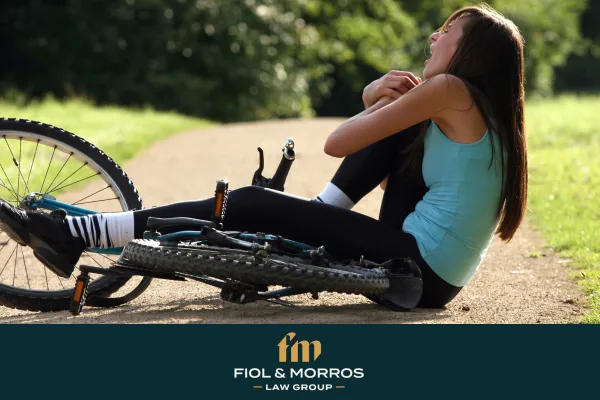
¿Qué es un accidente de bicicleta?
Un accidente de bicicleta Un accidente de bicicleta ocurre cuando una persona que va en bicicleta se ve involucrada en una colisión con otro vehículo, objeto o peligro. Estos accidentes suelen involucrar un vehículo motorizado, pero también pueden ocurrir debido a las malas condiciones de la carretera o a una pieza defectuosa de la bicicleta. Las lesiones por accidentes de bicicleta pueden incluir fracturas, traumatismos craneoencefálicos, abrasiones, lesiones en la médula espinal y otras afecciones graves.
Muchos accidentes podrían evitarse si los conductores y demás personas respetaran las normas de tráfico y prestaran atención.
Tampa and Florida Bicycle Accident Statistics
Florida is consistently ranked as one of the most dangerous states in the nation for cyclists. Understanding the scope of the problem in Tampa and Hillsborough County puts the risk in context and explains why experienced legal representation matters so much after a bicycle crash.
According to the National Highway Traffic Safety Administration (NHTSA), Florida accounts for roughly 14 to 16 percent of all cyclist fatalities in the United States each year — a disproportionate share for a single state. The Florida Department of Transportation (FDOT) records approximately 6,500 to 7,000 bicycle crashes annually statewide, resulting in more than 5,500 injuries and around 150 to 170 cyclist fatalities per year. In per-capita terms, Florida cyclists face a fatality rate roughly twice the national average.
Hillsborough County, which includes the city of Tampa, consistently ranks among Florida's most dangerous counties for bicycle crashes. The Tampa Bay region's combination of high vehicle traffic volume, a rapidly expanding cycling population, a warm climate that encourages year-round riding, and limited protected cycling infrastructure creates conditions where serious crashes are far too common. High-crash corridors in Tampa include Nebraska Avenue, Busch Boulevard, and sections of Dale Mabry Highway, where cyclists share lanes with fast-moving vehicles and truck traffic.
The 2024 FDOT Bicycle and Pedestrian Safety Initiative identified Hillsborough County as one of its highest-priority focus areas for infrastructure investment and enforcement. However, improvements take years to implement — and in the meantime, cyclists injured on Tampa's roads are entitled to pursue full compensation from the parties responsible for their crashes.
Causas comunes de accidentes de bicicleta en Tampa
Los accidentes de bicicleta en Tampa ocurren por muchas razones. Algunos son causados por conductores imprudentes, otros por el estado de las carreteras o la falta de infraestructura para bicicletas. Algunas de las causas más comunes son:
Conducción distraída
Conducción distraída Es una de las principales causas de accidentes de bicicleta en Tampa. Cuando los conductores miran sus teléfonos, ajustan la radio, comen o hablan con los pasajeros, no prestan toda su atención a la carretera. Esto hace que sea fácil que no vean a los ciclistas, especialmente a los que circulan por los carriles bici o cruzan intersecciones, lo que puede provocar lesiones graves o incluso la muerte.
No ceder el paso ni detenerse
Los conductores que no ceden el paso o no se detienen cuando es necesario ponen en peligro a los ciclistas. Esto suele ocurrir en los pasos de peatones, en intersecciones con señal de alto en las cuatro direcciones o al girar en una intersección. Los ciclistas tienen los mismos derechos en la vía que los demás vehículos, y cuando un conductor ignora las señales de tráfico o las normas de circulación, puede provocar un accidente grave con fracturas, traumatismos craneoencefálicos o lesiones aún peores.
Mal estado de las carreteras
Las malas carreteras son peligrosas para las bicicletas. El pavimento agrietado, baches, La grava suelta y la falta de señalización vial pueden dificultar el equilibrio. Los ciclistas son más propensos a caerse o sufrir accidentes cuando la carretera no recibe el mantenimiento adecuado.
Estos peligros en la carretera suelen provocar accidentes que causan abrasiones, lesiones en la médula espinal u otros daños graves.
Accidentes con puertas
Dooring accidents happen when someone inside a parked car opens the door into a cyclist's path without checking for traffic. These crashes happen fast and give cyclists almost no time to react. A dooring accident can throw a rider onto the pavement or into traffic, leading to traumatic injuries and costly medical care.
Exceso de velocidad y conducción temeraria
Speeding and reckless driving reduce the time drivers have to see and avoid cyclists. When a car or truck is going too fast or making sudden lane changes, it becomes much harder for the driver to safely share the road.
Estas acciones suelen provocar accidentes de bicicleta devastadores, especialmente en zonas concurridas de Tampa donde los carriles bici y el tráfico se mezclan estrechamente.
Common Bicycle Accident Injuries and Their Medical Costs
Cyclists have no crumple zone, airbag, or steel frame protecting them in a collision. When a car or truck strikes a cyclist – or when a cyclist is thrown from their bike – the resulting injuries are often severe and life-altering. The following are the most common injury types seen in Tampa bicycle accident cases, along with the real costs they carry.
Traumatic Brain Injury (TBI)
Head injuries are the leading cause of death and permanent disability in bicycle accidents. Even with a helmet, a high-force collision can cause concussion, contusion, diffuse axonal injury, or subdural hematoma. TBI severity is assessed using the Glasgow Coma Scale (GCS): mild (GCS 13-15), moderate (GCS 9-12), and severe (GCS 3-8). Moderate to severe TBI can require intensive care, neurosurgery, long-term rehabilitation, and lifetime cognitive or behavioral support. Total costs for severe TBI easily exceed $1 million over a lifetime, with first-year hospitalization alone reaching $150,000 to $400,000.
Lesiones en la Médula Espinal
When a cyclist is thrown headfirst onto pavement or struck by a vehicle, cervical (neck) and thoracic (upper back) vertebrae are at high risk of fracture, herniation, or cord compression. Partial or complete spinal cord injuries can result in permanent paralysis. As with TBI, lifetime care costs for complete cervical SCI can exceed $5 million. Even incomplete injuries requiring surgery, fusion, and physical therapy typically produce $100,000 to $500,000 in near-term medical costs.
Fractured Bones
The collarbone (clavicle), wrist (scaphoid and radius), forearm, and femur are the most commonly fractured bones in bicycle accidents. Cyclists instinctively extend their arms to brace for impact, making upper extremity fractures especially common. Femur fractures from vehicle impacts often require surgical fixation (ORIF) and months of physical therapy. Treatment costs range from $15,000 to $80,000 per fracture depending on severity and surgical complexity.
Road Rash and Degloving
Sliding across asphalt at speed strips skin and can penetrate to deeper tissue layers – a condition called degloving when full-thickness skin is torn away. Severe road rash requires debridement, skin grafting, and wound care similar to burn treatment. Infection risk is significant. Cases requiring skin grafting can cost $20,000 to $60,000 or more, with ongoing scar treatment and physical therapy adding to that total.
Facial Fractures and Dental Injuries
Without facial protection, cyclists who impact the ground or vehicle headfirst frequently sustain orbital fractures, nasal fractures, mandible fractures, and dental avulsions. Reconstructive surgery, maxillofacial procedures, and dental implants can produce combined costs of $30,000 to $150,000, with lasting cosmetic and functional effects.
Lesiones internas
A direct impact to the torso from a vehicle bumper, handlebar, or pavement can rupture the spleen, lacerate the liver, bruise the kidneys, or cause pneumothorax (collapsed lung). Internal injuries may not produce immediate symptoms but are life-threatening. Emergency surgery and ICU care for internal injuries routinely cost $50,000 to $250,000.
Injured in a Bicycle Accident? Get the Compensation You Deserve.
(813) 223-6773Free consultation – no fees unless we win your case

Cómo presentar una reclamación por accidente de bicicleta en Tampa
Presentar una reclamación por accidente de bicicleta en Tampa implica tomar las medidas adecuadas desde el principio para proteger sus derechos legales. El proceso comienza en el lugar del accidente y continúa con la gestión con las compañías de seguros y, posiblemente, con la presentación de una demanda.
Understanding how Florida laws apply to fault and compensation is also key to building a strong personal injury claim.
Pasos a seguir después de un accidente
- Solicitar ayuda - Always call 911 after a bicycle accident so the police and emergency responders can assist. A police report creates an official record that supports your injury claim.
- Reciba atención médica - Even if your injuries seem small, get checked by a doctor right away. Some injuries, like brain injuries or internal bleeding, may not show up right away but still require urgent medical care.
- Documenta la escena - Take clear photos of your bike, the vehicle involved, your injuries, the road conditions, and any signs or traffic signals. This evidence can be important for insurance claims and court cases.
- Obtenga información de testigos - If anyone saw the accident, ask for their name and contact details. Witnesses can help confirm how the accident happened and support your side of the story.
- Guardar todos los registros - Keep a file with your medical bills, records, bike repair costs, photos, and anything else related to the accident. This information will help your lawyer build a stronger case.
Negociaciones con empresas aseguradoras
After a bicycle crash, you will likely need to speak with insurance companies — either your own or the driver's. It's important to be careful with what you say. Insurance companies may try to reduce what they pay by claiming your injuries are not serious or that you were partly at fault.
Un abogado especializado en accidentes de bicicleta puede hablar con el ajustadores de seguros Nos encargamos de gestionar el papeleo y de garantizar la protección de sus derechos.
Presentar una demanda
Si la compañía de seguros se niega a ofrecer un acuerdo justo, presentar una demanda Este podría ser el siguiente paso. Su abogado le ayudará a presentar la demanda por lesiones personales ante el tribunal, a recopilar pruebas y a representarlo durante las audiencias o el juicio. Una demanda puede ayudarle a obtener una compensación completa por sus lesiones, gastos médicos, salarios perdidos y dolor y sufrimiento.
Florida's personal injury law allows you to bring claims against the negligent driver and others who may share legal responsibility.
Who Can Be Held Liable in a Tampa Bicycle Accident?
A bicycle accident claim is not always simply "cyclist vs. driver." Florida law allows victims to pursue claims against every party whose negligence contributed to the crash. Identifying all potentially liable parties is critical to maximizing recovery, particularly when one defendant carries limited insurance.
Motor Vehicle Driver
The driver of the car, truck, or motorcycle that struck the cyclist is the most common defendant. Liability is based on negligence: failing to maintain proper lookout, running a red light, making an unsafe turn, failing to give the required 3-foot clearance when passing (Florida Section 316.083), or driving while distracted or impaired. In Florida, drivers are presumed negligent when they rear-end a cyclist, turn across a cyclist's path of travel, or strike a cyclist who was lawfully in a marked bike lane.
Government / Municipality (Road Defect Claims)
When a bicycle accident is caused by a dangerous road condition — a pothole, missing pavement markings, a broken curb cut, a defective bike lane, or inadequate signage — the government entity responsible for maintaining that road may be liable. In Florida, Section 768.28 waives sovereign immunity and allows claims against state and local government. However, government claims require strict procedural compliance, including a 3-year statute of limitations and a mandatory 6-month pre-suit notice period sent to the agency before filing.
Bicycle or Component Manufacturer
If a mechanical failure in the bicycle itself caused or contributed to the accident — a fork that snapped under normal use, a brake lever that failed, a helmet that cracked in a manner inconsistent with the impact — a product liability claim can be brought against the manufacturer under Florida's strict liability doctrine. This claim runs parallel to any negligence claim against a driver and does not require proof of manufacturing negligence, only proof of defect, causation, and injury.
Rideshare Driver (Uber or Lyft)
When a cyclist is struck by an Uber or Lyft driver who was actively transporting a passenger or logged into the app, Uber's and Lyft's commercial liability insurance policies apply. Uber and Lyft each carry $1 million per-occurrence liability coverage while drivers are in Period 3 (passenger on board). When the driver is in Period 2 (app on, waiting for a ride) the coverage is reduced to $50,000/$100,000/$25,000. Establishing which coverage period applies requires obtaining the rideshare company's trip data, which your attorney can subpoena.
Commercial Vehicle and Trucking Companies
Delivery trucks, semi-trucks, and commercial vehicles pose a particularly severe risk to cyclists due to their size, blind spots, and wide turning radii. When a commercial driver strikes a cyclist, the driver's employer may be vicariously liable under respondeat superior. Federal Motor Carrier Safety Administration (FMCSA) regulations governing driver hours, vehicle maintenance, and load securement may also have been violated, creating additional grounds for negligence claims.

Leyes y reglamentos locales sobre accidentes de bicicleta en Tampa
Los accidentes de bicicleta en Tampa están regulados por leyes estatales y locales que establecen las normas para ciclistas y conductores, así como la forma de determinar la responsabilidad tras un accidente. Conocer las leyes de ciclismo vigentes en Florida y Tampa puede proteger sus derechos y mejorar su seguridad.
Estas leyes también desempeñan un papel importante en la forma en que se tramitan las reclamaciones por lesiones personales en los tribunales o con las compañías de seguros.
Normativa de seguridad para ciclistas específica de Tampa
Además de las leyes estatales, Tampa cuenta con sus propias normas de seguridad para ciclistas. Estas incluyen ordenanzas municipales que regulan dónde se puede circular, cómo cruzar intersecciones y cuándo ceder el paso a los peatones.
Tampa también ha desarrollado carriles bici señalizados, senderos para bicicletas y vías de uso compartido para mejorar la seguridad. El incumplimiento de estas normas locales puede utilizarse en contra de los ciclistas en una demanda por lesiones personales, incluso si el conductor del vehículo motorizado también tuvo la culpa.
Leyes sobre el uso del casco para ciclistas
La ley de Florida no exige que los ciclistas adultos usen cascos, Sin embargo, los motociclistas menores de 16 años deben usar un casco que les quede bien y cumpla con las normas federales de seguridad. Si bien no usar casco no necesariamente le impedirá presentar una reclamación, las compañías de seguros o los abogados defensores pueden usarlo para argumentar que sus lesiones, como traumatismos craneoencefálicos o lesiones cerebrales traumáticas, podrían haberse evitado.
Usar casco mejora la seguridad y puede proteger su reclamación.
Responsabilidad en accidentes de bicicleta según la ley de Florida
Liability in a Tampa bicycle accident depends on who acted with negligence or broke the law. Under Florida's comparative fault system, more than one person can be held responsible. If a driver ignored a traffic signal or failed to give a cyclist space, they may be liable for the crash.
Sin embargo, si el ciclista infringió las leyes de tránsito o circulaba en una zona insegura, eso puede reducir su indemnización. Probar la culpabilidad a menudo requiere ayuda de Abogados con experiencia en accidentes de bicicleta en Tampa quienes saben cómo aplicar las leyes de Florida, reunir pruebas y luchar por una indemnización completa.
Florida Bicycle Statutes That Directly Affect Your Injury Claim
Florida bicycle law contains several specific statutes that matter enormously in determining fault after a crash. Both cyclists and drivers are expected to follow these rules — and violations on either side are admissible evidence in a personal injury case. An experienced bicycle accident attorney will review these statutes in detail to identify every rule that was broken by the at-fault party.
Section 316.2065 — Bicycle as a Vehicle
Florida law treats a bicycle as a vehicle, which means cyclists have full rights to use the road and must obey all traffic laws. Cyclists must ride in the same direction as traffic, obey traffic signals, use hand signals when turning, and yield as required by law. Night riding requires a front white light visible from 500 feet and a rear red reflector or light visible from 600 feet. Violations of this statute by the cyclist can be used by the insurance company to argue comparative fault.
Section 316.083 — The 3-Foot Passing Law
Florida law requires drivers to maintain a minimum clearance of 3 feet (36 inches) when overtaking and passing a cyclist. When necessary to provide that 3-foot clearance, the driver is permitted to temporarily cross the centerline on a two-lane road after ensuring it is safe to do so. Violation of this statute by a driver who side-swipes or clips a cyclist is one of the most powerful pieces of evidence in a bicycle accident lawsuit — it establishes negligence per se, meaning the driver was automatically negligent as a matter of law.
Section 316.089 — Riding in Bicycle Lanes and on Paths
Cyclists are required to use a bicycle lane or path when one is present, unless they are passing, avoiding a hazard, preparing to turn left, or proceeding to a destination on the right that requires leaving the lane. A cyclist who is riding outside a marked bike lane for a legitimate safety reason cannot be penalized for it, and the defense cannot use the mere fact of lane departure as evidence of comparative fault.
Section 316.1995 — Riding on Sidewalks
Florida state law generally permits cyclists to ride on sidewalks unless prohibited by local ordinance. The Tampa City Code restricts sidewalk cycling in certain downtown business districts. When a cyclist is lawfully riding on a sidewalk and is struck by a vehicle entering or exiting a driveway, the driver has a duty to yield. Establishing the legality of sidewalk cycling at a particular location can be critical to defeating a comparative fault defense.
Section 627.736 — PIP No-Fault Coverage for Cyclists
Florida's Personal Injury Protection (PIP) insurance, which provides no-fault medical coverage, applies to cyclists who are injured in collisions with motor vehicles. If a cyclist has their own automobile insurance policy with PIP coverage, that policy will pay 80% of reasonable medical expenses up to $10,000, regardless of who was at fault. If the cyclist does not have an auto policy, the motor vehicle driver's PIP policy may cover the cyclist as a pedestrian-type claimant. To recover non-economic damages (pain and suffering) from the at-fault driver, the cyclist must meet the PIP injury threshold — permanent injury, significant scarring, or death.
Florida's 2023 Comparative Fault Law and What It Means for Cyclists
Florida revised its comparative fault system in 2023 (Section 768.81, Florida Statutes) — a change that significantly affects bicycle accident claims. Under the prior "pure" culpa comparativa rule, a cyclist could recover damages even if they were 99% at fault. Under the new "modified" comparative fault rule, a cyclist who is found to be 51% or more at fault for the accident is completely barred from recovering any compensation. This is called the "51% bar," and it makes the fight over fault percentages even more consequential than before.
In bicycle accident cases, insurance companies and defense attorneys frequently argue that the cyclist contributed to the crash. Common arguments include: the cyclist was not using required lights at night (Section 316.2065), the cyclist was riding outside the bike lane without justification, the cyclist was not wearing a helmet (for injury-severity purposes), the cyclist failed to signal a turn, or the cyclist was traveling in a direction counter to traffic. Each of these arguments is designed to push the cyclist's fault percentage as high as possible — ideally to 51% or above, which would eliminate the entire claim.
A skilled bicycle accident attorney will counter these arguments systematically. If the crash occurred at night and the defense argues no lights, your attorney will examine whether street lighting at the scene made lights effectively unnecessary, challenge the driver's own speed and lookout, and point out that the driver's failure to maintain the 3-foot clearance required by Section 316.083 was the primary cause of the collision regardless of the cyclist's equipment. The goal is to keep your fault percentage below 51% and to accurately apportion the majority of the fault to the negligent driver, road authority, or other responsible party.
One important consideration for cyclists injured in Florida: if your fault is determined to be, say, 30%, your total damages award is reduced by 30%. So if a jury awards $500,000 in total damages and finds you 30% at fault, you collect $350,000. The 2023 law did not change proportional reduction below 51% – only the absolute bar at 51% is new. This means even cases where the cyclist made some contribution to the crash can produce substantial recoveries if the evidence is handled correctly.
What Compensation Can You Recover After a Tampa Bicycle Accident?
Florida law allows bicycle accident victims to pursue two primary categories of damages – economic and non-economic – and in cases of egregious driver conduct, punitive damages as well.
Daños Económicos
These are your measurable out-of-pocket and financial losses. They include past and future medical expenses (emergency care, hospitalization, surgery, rehabilitation, assistive devices, and long-term care), lost wages from time missed at work, diminished future earning capacity if your injuries prevent you from returning to your previous job, bicycle repair or replacement costs, and transportation expenses for ongoing medical treatment. Economic damages are documented through medical bills, pay stubs, employer letters, and expert economic projections. In catastrophic injury cases involving TBI or spinal cord injury, future medical and care costs projected over a lifetime may far exceed the initial treatment costs.
Daños No Económicos
These compensate for intangible harms that do not have a direct dollar value but profoundly affect quality of life. They include physical pain and suffering, emotional distress, anxiety and post-traumatic stress disorder (PTSD), loss of enjoyment of life (inability to participate in activities you loved), disfigurement from road rash or facial injuries, and loss of consortium (the effect of the injury on your relationship with your spouse or family). Florida does not cap non-economic damages in most personal injury cases against private defendants – the amount is determined by the jury based on the severity and permanence of the harm.
Wrongful Death Damages
If a bicycle accident results in a fatality, the decedent’s estate and surviving family members may bring a wrongful death claim under Florida Section 768.19. Recoverable damages include the decedent’s pain and suffering before death, lost future earnings, funeral and burial costs, and the survivors’ loss of companionship, guidance, and support. Wrongful death claims in bicycle accident cases involving a fatality regularly produce multi-million-dollar verdicts and settlements, particularly when the victim was young with significant future earning potential.
Daños Punitivos
When a driver’s conduct was especially reckless – driving under the influence of alcohol or drugs, street racing, or deliberately targeting a cyclist – Florida Section 768.72 permits punitive damages on top of compensatory damages. Punitive damages require a separate court approval before they can be pursued, and the plaintiff must show intentional misconduct or gross negligence. When approved, punitive damages can substantially multiply the total award as a way of punishing the defendant and deterring similar conduct.
Injured in a Bicycle Accident? Get the Compensation You Deserve.
(813) 223-6773Free consultation – no fees unless we win your case
Statute of Limitations for Bicycle Accident Claims in Florida
Under Section 95.11(3)(a) of the Florida Statutes, you have two years from the date of your bicycle accident to file a personal injury lawsuit. This filing deadlinewas reduced from four years to two years by the Florida Legislature in 2023 and is strictly enforced. If you miss the deadline, you permanently lose your right to sue for compensation — regardless of how serious your injuries are or how clearly the other party was at fault.
If your bicycle accident involved a road defect or dangerous condition maintained by a government entity (city, county, or the Florida Department of Transportation), additional procedural requirements apply. Claims against the State of Florida and its agencies and subdivisions are governed by Section 768.28, which requires that you provide a written pre-suit notice to the relevant agency at least six months before filing suit. The overall limitations period for government claims is three years, but the 6-month notice requirement means you must act even earlier — ideally within the first few weeks of the accident — to preserve your right to sue the government.
For cyclists who were minors at the time of the accident, the two-year limitations clock does not begin until their 18th birthday. For adults, limited tolling (pausing) of the limitations period may apply if the defendant fraudulently concealed their conduct — for example, if a city covered up known reports of a dangerous pothole — or if the injured party was legally incapacitated. These exceptions are narrow and require legal analysis. Do not rely on them as a reason to delay consulting an attorney.
The practical urgency extends well beyond the legal deadline. Evidence in bicycle accident cases degrades quickly: tire marks and road debris at the scene disappear within days, surveillance camera footage is often overwritten within 30 to 90 days, witnesses become harder to locate as time passes, and the at-fault driver's vehicle may be repaired or sold before an inspection can occur. Contact a Tampa bicycle accident lawyer as soon as possible after your crash — not just to preserve your legal rights, but to protect the evidence that proves your case.
Key Florida Statutes Governing Bicycle Accident Claims
The following statutes are directly relevant to bicycle accident litigation in Florida. Your attorney will cite these laws in negotiations, court filings, and at trial:
| Estatuto | Título | Pertinencia |
|---|---|---|
| Section 316.2065 | Bicycle as a Vehicle | Treats bicycles as vehicles with full road rights and corresponding responsibilities. Sets nighttime lighting requirements (500-ft front light, 600-ft rear reflector). Violations affect comparative fault analysis. |
| Section 316.083 | 3-Foot Passing Law | Requires drivers to maintain at least 3 feet of clearance when overtaking a cyclist. Violation constitutes negligence per se — automatic negligence as a matter of law — in a bicycle accident lawsuit. |
| Section 316.089 | Bicycle Lane Rules | Requires cyclists to use available bike lanes; provides exceptions for passing, avoiding hazards, left turns, and accessing destinations on the right. Lawful lane departure cannot be used as comparative fault evidence. |
| Sección 95.11(3)(a) | Plazo de prescripción de 2 años | Personal injury claims must be filed within 2 years of the accident date (amended 2023, reduced from 4 years). Government claims require 6-month pre-suit notice under Section 768.28. |
| Sección 768.81 | Fallo comparativo modificado | Recovery reduced proportionally by plaintiff's fault percentage. Plaintiff completely barred from recovery if 51% or more at fault (amended 2023). Replaces former pure comparative fault system. |
| Sección 768.28 | Exención de inmunidad soberana | Allows claims against state and local government for dangerous road conditions. Requires 6-month pre-suit written notice to the responsible agency before filing suit. |
| Section 627.736 | Cobertura PIP sin culpa | Florida PIP coverage applies to cyclists struck by motor vehicles. Provides 80% of reasonable medical expenses up to $10,000. Non-economic damages require meeting the permanent injury threshold. |
Proven Results in Bicycle Accident and Personal Injury Cases
Our Tampa bicycle accident attorneys have a strong track record of recovering substantial compensation for clients injured in cycling crashes and other personal injury cases throughout Florida.
BICYCLE ACCIDENT
$3M
PERSONAL INJURY
Catastrophic cycling collision with commercial vehicle
$2.5M
SLIP & FALL
Severe injuries from hazardous property conditions
$875K
AUTO ACCIDENT
Multi-vehicle collision with traumatic injuries
$750K
BURN INJURY
Serious burns requiring extensive medical treatment
$600K
SPINAL CORD INJURY
Burst fractures requiring surgical intervention
$500K
PREMISES LIABILITY
Dangerous property condition causing severe harm
*Past results do not guarantee future outcomes. Each case is unique and evaluated on its own facts.
Why Choose Fiol & Morros Law Group for Your Tampa Bicycle Accident Case?
When you are seriously injured in a bicycle accident, you need a law firm with the experience, resources, and commitment to hold the at-fault party fully accountable. Fiol & Morros Law Group brings over 35 years of personal injury litigation experience to every bicycle accident case.
AV Preeminent Rated
Our lead attorney, Alejandro Fiol, holds an AV Preeminent Peer Review Rating from Martindale-Hubbell — the highest possible rating for legal ability and professional ethics — and is licensed in Florida, New York, and the U.S. District Court, Middle District of Florida.
Morgan & Morgan Background
As a former managing partner at Morgan & Morgan, one of the nation's largest personal injury firms, Alex Fiol helped establish their Tampa office and led the nursing home abuse department. His experience with high-stakes, high-volume litigation means he knows how large insurance carriers and defense teams operate — and how to beat them.
Deep Knowledge of Florida Bicycle Law
We understand Florida's bicycle statutes — including the 3-foot passing law (Section 316.083), PIP coverage rules for cyclists, and the 2023 comparative fault changes — and how to use them to maximize your recovery and defeat the insurance company's comparative fault arguments.
Accident Reconstruction and Medical Experts
Bicycle accident cases require accident reconstruction specialists, biomechanical engineers, neurologists, and life care planners. We maintain a network of expert witnesses ready to support your case.
Si no ganamos, no cobramos
We handle all bicycle accident cases on a contingency fee basis — you pay nothing upfront and nothing at all unless we recover compensation for you.
Fiol & Morros Law Group | 1515 N Marion St, Tampa, FL 33602 | (813) 223-6773 | fiolinjurylaw.com
Frequently Asked Questions About Tampa Bicycle Accidents
¿Necesito un abogado especializado en lesiones personales después de un accidente de bicicleta en Tampa?
Sí. Un abogado especializado en lesiones personales puede ayudarle a comprender sus derechos, reunir pruebas, gestionar su reclamación al seguro y obtener una indemnización completa por sus gastos médicos, salarios perdidos y dolor.
¿Puede un abogado especializado en accidentes de bicicleta ayudar con lesiones faciales o traumatismos a largo plazo?
Por supuesto. Un abogado especializado en accidentes de bicicleta puede incluir una indemnización por lesiones faciales, angustia emocional y otros efectos duraderos al presentar una demanda o reclamación por culpa.
¿Qué pasaría si el accidente de bicicleta ocurriera fuera de los carriles bici?
You may still have a case. Cyclists are allowed to leave bicycle lanes when needed for safety. A lawyer can prove that a driver's negligence still caused the crash.
¿Puedo presentar una demanda por homicidio culposo si un ser querido falleció en un accidente de bicicleta?
Sí. Si el accidente provocó una víctima mortal, los familiares supervivientes podrían interponer una demanda por homicidio culposo para recuperar daños y perjuicios, como los gastos médicos y los costos del funeral.
¿Mi póliza de seguro de automóvil o mi póliza PIP cubren los accidentes de bicicleta?
En Florida, su póliza PIP (Protección contra Lesiones Personales) podría cubrir algunos gastos médicos derivados de un accidente traumático con un vehículo motorizado, incluso si usted iba en bicicleta. Un abogado puede explicarle cómo se aplica esto en su caso.
How long do I have to file a bicycle accident lawsuit in Florida?
Under Florida Section 95.11(3)(a), you have two years from the date of your bicycle accident to file a personal injury lawsuit. This deadline was reduced from four years to two years by the Florida Legislature in 2023. Missing the deadline generally results in permanent loss of your right to sue, regardless of how strong the evidence is. If your accident involved a dangerous road condition maintained by a city, county, or state agency, you must provide written pre-suit notice to that government entity at least six months before filing a lawsuit — and the total limitations period for government claims is three years. Because of this layered timeline and the urgency of preserving evidence, you should contact a bicycle accident attorney within days or weeks of the crash. Do not assume you have "plenty of time." Surveillance camera footage is typically overwritten within 30 to 90 days, tire marks at the scene fade quickly, and witnesses become harder to locate as time passes. Early attorney involvement protects both your legal rights and the physical evidence that supports your case.
Can I sue the city or government if a pothole or road defect caused my bicycle accident?
Yes. If a dangerous road condition — a pothole, collapsed pavement edge, missing bike lane markings, defective curb cut, or inadequate signage — caused or contributed to your bicycle accident, the government entity responsible for maintaining that road may be liable under Florida Section 768.28. Government claims in Florida have strict procedural requirements that differ from claims against private parties. You must send a written pre-suit notice to the responsible agency within the applicable limitations period, and you must wait at least six months before filing a lawsuit. Damages against government entities are capped at $200,000 per person ($300,000 per incident) under Section 768.28(5), although higher recovery is possible through a legislative appropriation. Given the six-month notice requirement and the complexity of identifying which agency owns and maintains a particular stretch of road or bike lane, it is critical to contact an attorney immediately after a road-defect bicycle accident.
What is Florida's 3-foot passing law, and how does it help my bicycle accident case?
Florida Section 316.083 requires drivers to maintain a minimum clearance of 3 feet when passing a cyclist. When a driver passes too closely — clipping a cyclist's handlebar, mirror, or body — the violation of this statute establishes negligence per se, meaning the driver is automatically legally negligent because they violated a safety statute. Your attorney will use the 3-foot passing law by examining crash scene evidence to reconstruct the distance between the vehicle and the cyclist at the moment of impact, obtaining the police report, and potentially retaining an accident reconstruction expert to demonstrate that the clearance was less than 3 feet. The 3-foot passing law also applies in hit-and-run bicycle accidents where physical evidence of the impact angle and paint transfer can help establish that the vehicle passed too closely.
What if I was hit by an Uber or Lyft driver while riding my bike?
If you are struck by a driver who was actively working for Uber or Lyft at the time of the crash, the rideshare company's commercial liability insurance policy may provide coverage for your injuries. During Period 3 (driver has a passenger or is on the way to pick one up), Uber and Lyft each carry $1 million per-occurrence liability coverage. During Period 2 (driver is logged into the app and waiting for a ride request), coverage is reduced to $50,000 per person / $100,000 per accident for bodily injury. Determining which period applied at the moment of the crash requires obtaining the rideshare company's trip data, which your attorney can subpoena. Act quickly — preserving trip data through a formal legal demand early in the process is essential.
What is the most common serious injury in bicycle accidents and how does it affect compensation?
Traumatic brain injury (TBI) is the most common cause of death and permanent disability in bicycle accidents. Even when a cyclist is wearing a helmet, a high-energy collision can produce concussion, contusion, intracranial bleeding, or diffuse axonal injury. TBI affects compensation significantly: first-year hospitalization, neurosurgery, and intensive rehabilitation can exceed $200,000 to $400,000, and lifetime attendant care for a severely injured person can exceed $3 million. Non-economic damages for TBI are typically among the highest in personal injury law because the loss of cognitive function, memory, personality, and independence profoundly affects every aspect of a person's life. To fully document a TBI claim, your attorney will work with neurologists, neuropsychologists, and vocational experts who can objectively assess the injury's severity and its lifetime impact.
How is fault determined when the cyclist was partly to blame for the accident?
Florida's modified comparative fault system (Section 768.81) allows fault to be apportioned among all parties who contributed to the accident. The jury assigns each party a percentage of fault — for example, 80% to the driver and 20% to the cyclist — and the cyclist's recovery is reduced proportionally. However, if the cyclist is found 51% or more at fault, they recover nothing. Insurance companies commonly argue cyclist fault based on: failure to use required lights at night, riding outside the marked bike lane, failure to obey traffic signals, riding against traffic, not wearing a helmet, and making an unexpected turn or stop. Your attorney will systematically challenge each of these arguments with evidence showing the driver's conduct was the primary cause of the crash. The at-fault driver's violation of the 3-foot passing law (Section 316.083) or traffic signal violation constitutes negligence per se and strongly anchors the majority of fault to the driver.
What should I do immediately after a bicycle accident in Tampa?
Call 911 immediately so police and emergency responders can arrive. Get medical attention right away, even if your injuries seem minor — some injuries like traumatic brain injury or internal bleeding may not show symptoms immediately. Document the scene by taking photos of your bicycle, the vehicle involved, your injuries, road conditions, and any traffic signals or signs. Collect the names and contact information of any witnesses. Save all records including medical bills, repair costs, and the police report. Do not give a recorded statement to any insurance company before speaking with a bicycle accident attorney. An experienced lawyer can protect your rights from the start and ensure critical evidence is preserved.
Contacte con nuestro abogado especializado en accidentes de bicicleta en Tampa para una consulta gratuita.
Si usted o algún ser querido ha resultado herido en un accidente de bicicleta en Tampa, es importante hablar con un abogado que conozca las leyes de Florida y la gravedad que pueden tener estos accidentes. Fiol and Morros Law Group Sabemos lo mucho que un accidente puede afectar tu salud, tus finanzas y tu vida diaria. Desde las facturas médicas y la pérdida de ingresos hasta el dolor, el estrés y la atención continua, trabajamos para asegurarnos de que no tengas que afrontarlo solo.
Nuestros abogados especializados en accidentes de bicicleta en Tampa revisarán su caso, le explicarán sus derechos y le ayudarán a dar los siguientes pasos. Solo cobramos honorarios si ganamos su caso. Permítanos encargarnos de los aspectos legales mientras usted se concentra en su recuperación.
To schedule your free consultation, contact our office today. You can call us or fill out our online form and a team member will reach out to help.

¿Lesionado?
Contacte a Fiol & Morros Law Group para una consulta gratuita hoy mismo.
Llámenos para una Consulta Gratuita

 Español
  English